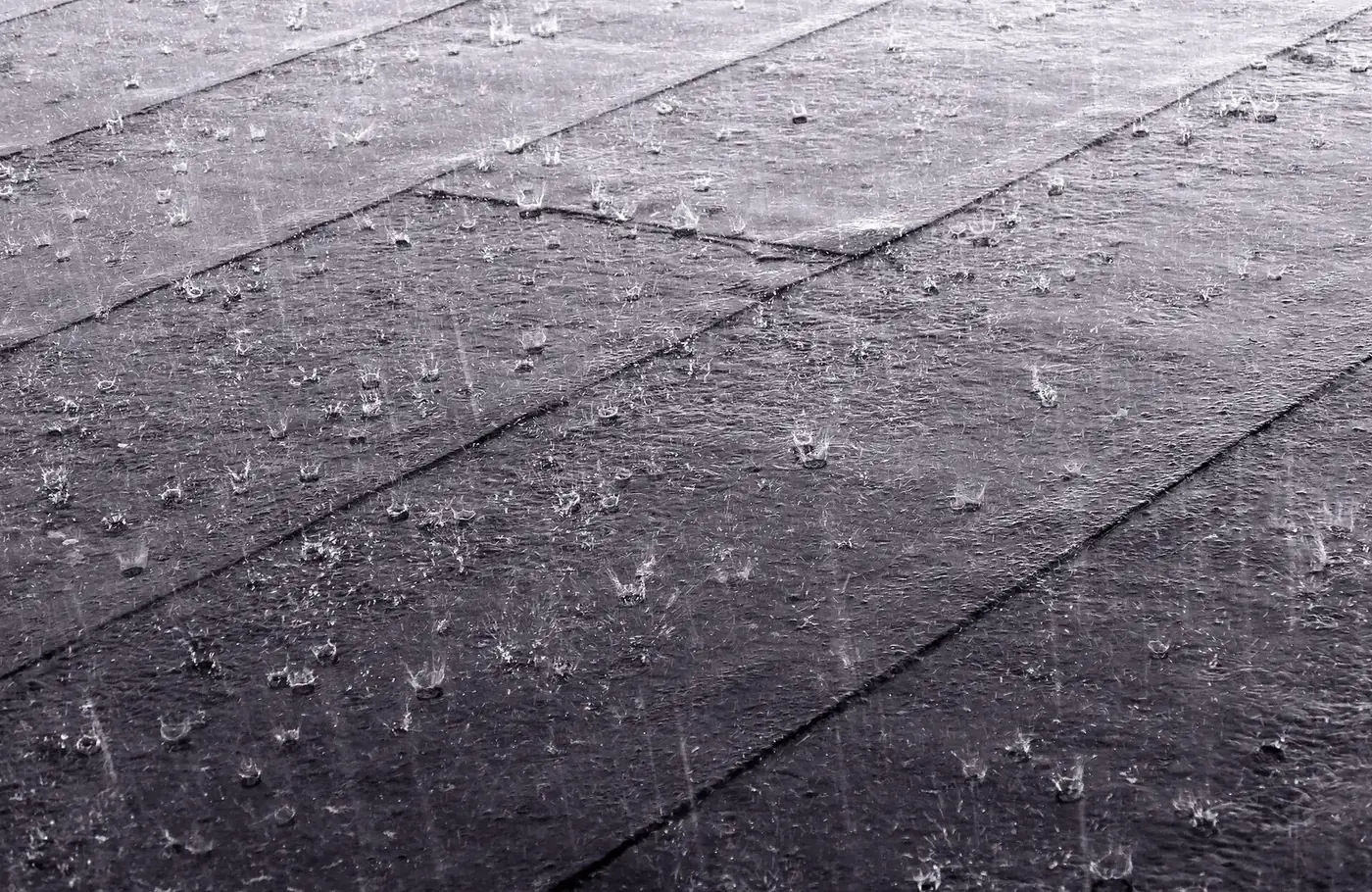
Spring in Fort Bend County brings warm Gulf air colliding with cold fronts, and that mix produces hail several times in a typical year. Some storms drop pea-sized ice that bounces harmlessly off the lawn. Others leave cars dented in the Kroger parking lot on Highway 6. If you think you might have a hail damage roof Missouri City storms have hit, this guide covers what to look for, what is normal wear, and what to do next.
Hail damage is tricky because it rarely looks dramatic. A roof can lose years of life without a single missing shingle, and the window to file an insurance claim does not stay open forever.
Why hail damage is hard to spot from the ground
Asphalt shingles are made of a fiberglass mat coated in asphalt and topped with ceramic granules. When a hailstone hits, it can crack the mat or knock granules loose without tearing the shingle. From thirty feet away, the roof looks the same as it did the day before. Up close, you may see a dark spot where the asphalt is now exposed to sunlight. Over the next few summers, UV and heat break that spot down, and that is where leaks begin.
Roof age matters too. Many 1980s and 1990s homes in Quail Valley, Lake Olympia and Hunters Glen have shingles that are already brittle. Brittle shingles crack under smaller hail than new ones do. Newer roofs in Sienna and Riverstone tend to hold up better, but they are not immune, especially on slopes facing the direction the storm came from.
Signs of a hail damage roof Missouri City homeowners can check safely
Start on the ground. Walk the yard, patio and driveway after the storm and look at the softer things around your house. They tell you what size hail fell and which direction it came from.
Clues around the house
- Dented gutters and downspouts. Aluminum dents easily and holds the mark. Several dents in a row are a strong sign the roof was hit too.
- Spatter marks on fences, AC units and siding. Hail knocks off dirt and oxidation, leaving bright round spots.
- Dented AC condenser fins and damaged patio furniture or grills.
- Granules piled up at downspout outlets or washed onto the driveway.
- Shredded leaves and broken twigs scattered across the lawn.
Clues on the roof itself
- Dark, round bruises on shingles where granules are missing. They often feel soft when pressed, like a bruise on fruit.
- Cracked or split shingles, particularly on older roofs.
- Dented metal vents, ridge vents and flashing. These are some of the easiest signs to photograph.
- Cracked skylights or broken plastic vent covers.
Hail damage or normal wear?
Insurance adjusters spend a lot of time separating storm damage from age and wear, so it helps to know the difference. Hail hits tend to be random, scattered across a slope with no pattern. They often show a fresh, dark exposed mat. Wear, on the other hand, shows up as uniform granule loss across the whole roof, curling or cupping shingle edges, cracking in straight lines along the tabs, and blistering from trapped moisture.
Other things that get confused with hail include foot traffic from previous repairs, nail pops that push shingles up from below, and scuffs from tree limbs rubbing in the wind. A trained eye can usually tell these apart quickly, which is one reason a professional inspection before you call the insurer can save time.
Direction is another clue. Hailstorms in Fort Bend County usually move in with a front, so the slopes facing the incoming storm often take far more hits than the opposite side. If the north and west slopes are covered in bruises while the others look clean, that pattern points to a storm rather than age. Normal wear tends to be worst on the south and west slopes that get the most afternoon sun, regardless of any storm.
What to do in the first few days
- Write down the date and time of the storm. Save a screenshot of the weather alert or a news story about hail in Missouri City, Sugar Land or Stafford that day.
- Photograph everything you can see from the ground: gutters, vents, AC unit, fence spatter, and any debris. Include something for scale, like a coin next to a dent.
- Check inside. Look at ceilings and the attic for new stains or drips.
- Get a roof inspection before calling your insurer if you are not sure there is damage. A documented inspection helps you decide whether a claim makes sense.
- Cover active leaks to prevent further damage. Most policies expect you to take reasonable steps to protect the home.
How a professional hail inspection works
When we inspect a hail damage roof Missouri City storms have hit, we start with the soft metals and the gutters, then move to the shingles slope by slope. On each slope we mark a test area and count hits, photograph each one with chalk circles for clarity, and note the condition of vents, flashing and ridge cap. You get the photos and a written summary, whether or not there is enough damage for a claim.
Our free roof inspection includes that photo documentation with no obligation. If the damage looks like it qualifies, our storm and hail damage team can explain the next steps and what repairs or replacement would involve.
Working with your insurance after hail
If damage is confirmed, you will file the claim with your insurer and an adjuster will schedule a visit. It helps to have your contractor there. We can walk the roof with the adjuster and point out each documented hit so nothing is overlooked. We are not public adjusters and we do not negotiate your claim for you, but we can make sure the physical evidence is clear.
Be wary of anyone who offers to cover or waive your deductible. That practice is illegal under Texas Business & Commerce Code §27.02, and it puts you at risk too. A trustworthy roofing contractor in Missouri City will tell you the deductible is your responsibility. For more detail, see our insurance claim help page and the post on roof insurance claims in Fort Bend County.
Should you upgrade after a hail claim?
If your roof needs to be replaced, consider impact-resistant shingles. Class 4 rated products are designed to handle hail better, and many Texas insurers offer a premium discount for them. The savings vary by carrier, so ask your agent before you choose. We cover the details in our post on impact-resistant shingles and insurance discounts.
Hail will keep coming every spring. Knowing the signs of a hail damage roof Missouri City storms leave behind, and acting quickly when you see them, keeps a small problem from turning into a ceiling repair. If you are unsure, call (512) 297-7580 and we will take a look.