Missouri City does not do gentle rain very often. A summer thunderstorm or a tropical band off the Gulf can drop several inches in a few hours, and that is exactly when weak spots in a roof give way. If you have found a roof leak after heavy rain, the next hour matters more than the next week. Containing the water and documenting what happened will limit the damage to your home and help any insurance claim that follows. This guide walks through the steps in order.
Step One: Contain the Water Inside
Before you think about the roof, protect the house.
- Catch the drip. Put a bucket, pot or storage bin under the leak, with a towel inside to reduce splashing.
- Move valuables. Shift furniture, electronics, rugs and anything that can wick water away from the wet area.
- Relieve a bulging ceiling. If water is pooling above drywall and the ceiling is sagging, poking a small hole at the lowest point with a screwdriver lets it drain into the bucket in a controlled way instead of collapsing. Stand to the side and only do this if you are comfortable.
- Watch the electrical. If water is near a light fixture, ceiling fan or outlet, turn off that circuit at the breaker panel.
- Check the attic, carefully. If you can safely reach it, look for wet insulation and place a container where water is dripping onto the attic floor. Step only on joists.
Step Two: Document Everything
Good records make every next step easier, whether you file a claim or simply hire a repair.
- Take photos and short videos of the leak, the ceiling stain, wet floors and any damaged belongings.
- Note the date, time and how hard it was raining, along with wind direction if you know it.
- Once it is safe, photograph the outside of the house from the ground: missing shingles, debris on the roof, overflowing gutters or a fallen limb.
- Keep receipts for anything you buy to protect the home, such as tarps, fans or a dehumidifier.
Our storm damage checklist lays out what to capture so nothing gets missed.
Common Causes of a Roof Leak After Heavy Rain
Heavy rain finds problems that normal showers never touch. In Missouri City homes, these are the usual suspects:
Flashing failures
Flashing seals the joints where the roof meets walls, chimneys and skylights. On two-story homes in Sienna, Riverstone and Lake Olympia, the spots where a lower roof meets a second-story wall are frequent trouble areas. Wind-driven rain can push water behind loose or poorly lapped flashing and into the wall cavity.
Worn pipe boots
The rubber collars around plumbing vents crack after years in the Texas sun. A cracked boot may stay dry in a drizzle but let water pour in during a downpour. This is one of the most common leak sources we find.
Clogged valleys and gutters
Mature trees in Quail Valley, Hunters Glen and other older neighborhoods drop leaves and pine needles into valleys and gutters. When water cannot drain fast enough, it backs up under the shingle edges. Clean, properly sized gutters and downspouts help a lot.
Wind damage from the storm itself
Strong gusts can lift or tear off shingles, especially on older roofs where the sealant strips have weakened. The May 2024 derecho and Hurricane Beryl both left plenty of Fort Bend County roofs with missing tabs that leaked in the next rain.
Aging shingles
Roofs near the end of their life lose granules and become brittle, letting water get through in more than one place. If leaks keep showing up in new spots, the roof itself may be the problem. Our guide on whether to repair or replace an older roof can help you decide.
Why the Stain Is Not Always Under the Leak
Water rarely falls straight down. It can enter near the ridge, run along a rafter or the top of the decking and drip onto the ceiling several feet away. That is why patching the shingles directly above a stain often fails. A proper inspection traces the path from the attic upward, looking for darkened wood, wet insulation and staining on the underside of the decking, and then matches it to what is visible on the roof surface.
Step Three: Temporary Protection
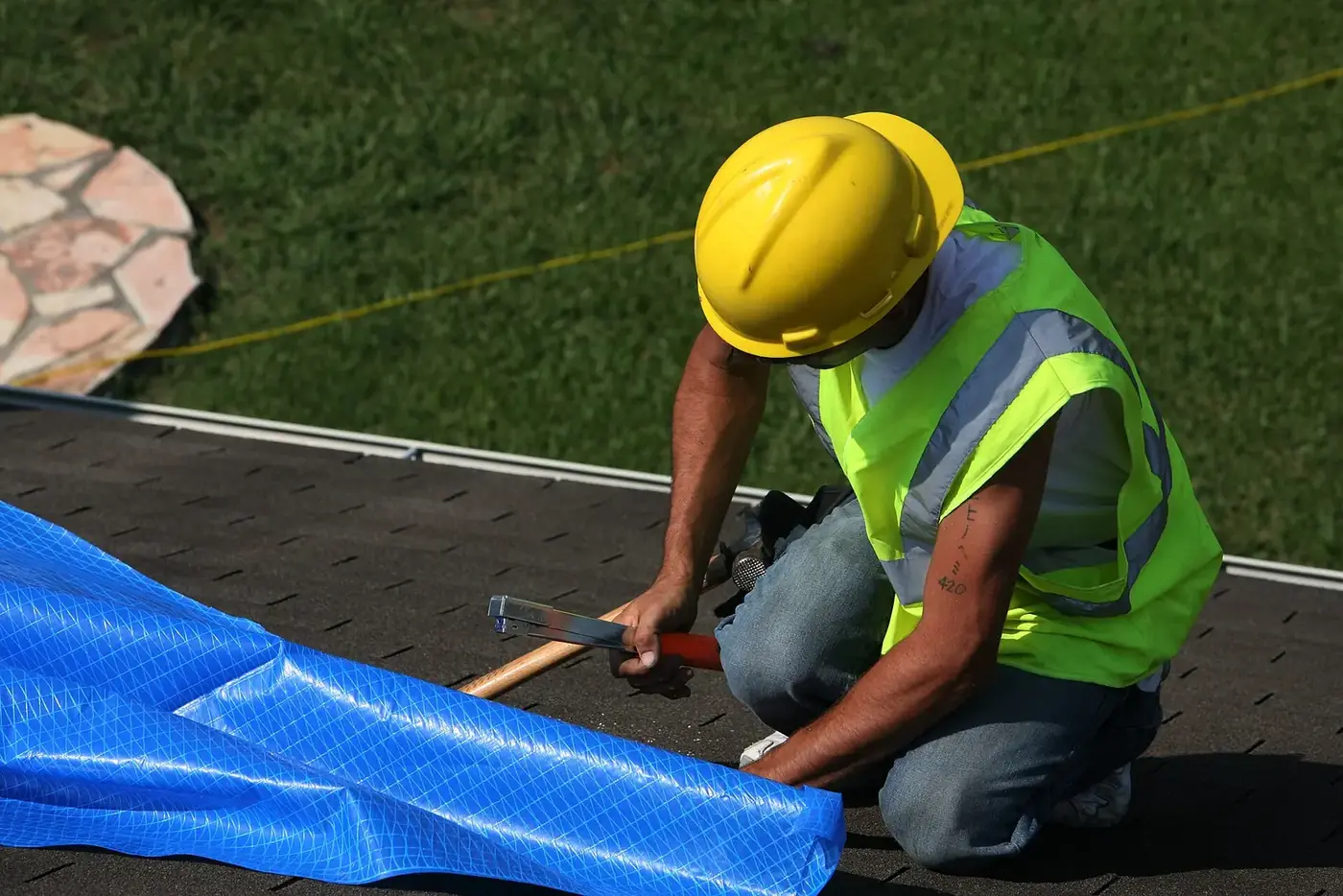
If shingles are missing or a limb punched through the roof, a temporary cover keeps more rain out until a permanent repair. A tarp should extend well past the damaged area, run over the ridge where possible and be fastened with boards rather than nails driven through the middle of the tarp. Installing it safely usually requires two people, dry conditions and a ladder set on firm ground. If that is not you, call a professional.
Many homeowners policies expect you to take reasonable steps to prevent further damage, so a temporary fix and the receipts that go with it can matter for a claim. Check your policy for the specifics.
Step Four: Insurance or Out of Pocket?
Whether insurance helps depends on the cause. Sudden damage, such as wind tearing off shingles or a tree falling on the roof, is often covered under many Texas policies. Leaks from worn pipe boots, old shingles or clogged gutters are usually treated as maintenance and are not. If the storm clearly caused the damage, our article on filing a roof insurance claim in Fort Bend County explains what to expect. We can document the damage and meet your adjuster on site, though we do not negotiate claims and never cover deductibles.
Preventing the Next Leak Before Storm Season
Most leaks that show up in a downpour were developing for months. A little attention before hurricane season starts on June 1 goes a long way:
- Clear gutters and valleys in late spring and again in fall, when the oaks and pines in older neighborhoods drop the most debris.
- Look at pipe boots and vents with binoculars from the yard. Cracked rubber or a lifted collar is an easy repair before it becomes a ceiling stain.
- Trim limbs that hang over the roof or could fall on it in high wind.
- Check the attic after the first big storm of the year for damp spots, stained decking or daylight around penetrations.
- Walk the perimeter after storms and look for shingle pieces, granules or flashing in the yard.
For a broader list, see our guide to hurricane roof prep in Missouri City.
Step Five: Get the Source Found and Fixed
Once the weather clears, get the roof inspected before the next storm. A small leak left alone can rot decking, ruin insulation and lead to mold in the humid months that follow. Our free roof inspection traces the leak from the attic to the roof surface and includes photos so you can see the cause yourself. Most leaks turn out to be a straightforward repair; a few reveal a roof that is ready for replacement.
As a roofing contractor in Missouri City, we know how fast a roof leak after heavy rain can spread when the next system is already on the radar. Call (512) 297-7580 and we will get someone out to take a look.